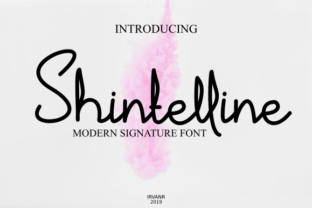
Shintelline: The Signature Script Font That Feels Like Handwritten Confidence
If you’ve ever stared at a blank poster, refreshed a landing page for the fifth time, or hesitated before adding text to your Instagram story—you know that typeface choice isn’t just about looks. It’s about tone, trust, and whether someone stops scrolling long enough to feel something. That’s where Shintelline comes in: not another decorative script with shaky ligatures or awkward spacing, but a signature script font designed to behave like handwriting that’s been practiced, polished, and purpose-built for real use.
What Makes Shintelline More Than Just “Pretty Cursive”
Shintelline isn’t mimicking calligraphy—it’s channeling the warmth of intentional penmanship. Its letterforms have gentle contrast, open counters, and subtle rhythm that reads clearly at small sizes *and* holds presence at large ones. Unlike many script fonts that collapse into illegibility below 24pt or look stiff when stretched across a banner, Shintelline scales naturally. It includes alternate characters, contextual swashes, and thoughtful kerning pairs—so “The” doesn’t jam into “Shintelline,” and “love” doesn’t look like one tangled loop.
It’s also built with digital versatility in mind: OpenType features work smoothly in Adobe apps, Figma, Canva (with upload), and even modern web design tools. No need to fake swashes with manual vector tweaks—just type, select, and refine.
For Small Business Owners Building Recognition
Sarah runs a ceramic studio out of her garage-turned-studio. Her logo uses Shintelline for the word “Clay & Co.”—not because it’s trendy, but because customers tell her it “feels handmade, not mass-produced.” She uses the same font on packaging labels, business cards, and her Etsy shop banner. Consistency matters—but so does personality. Shintelline gives her brand voice without requiring a custom logotype budget.
For Educators Making Learning Feel Human
Mr. Diaz teaches middle school science and prints weekly “Science Spotlight” posters for his classroom wall. He swaps Helvetica for Shintelline when highlighting student quotes (“I finally understood photosynthesis!”) or framing big ideas (“Observe. Question. Wonder.”). Students notice the difference—it feels less like an assignment and more like an invitation. He also uses it sparingly in Google Slides headers—not for body text, but to signal “this slide is about reflection, not facts.”
For Freelancers Who Need Fast, Cohesive Branding
A freelance photographer named Lena uses Shintelline across three touchpoints: her website hero headline (“Timeless Portraits, Thoughtfully Made”), the watermark on her portfolio images (light gray, low opacity, elegant but unobtrusive), and the thank-you note she emails after bookings. It’s one font doing three distinct jobs—no mismatched scripts, no licensing headaches. She didn’t spend hours comparing alternatives; she picked Shintelline because it worked immediately, looked professional *and* personal, and loaded fast on her Squarespace site.
For Bloggers and Content Creators Adding Visual Texture
On lifestyle blogs or Substack newsletters, Shintelline shines in pull quotes. Not every paragraph needs it—but when a line like “Rest isn’t lazy. It’s preparation in disguise.” appears mid-article in Shintelline, readers pause. It creates breathing room. Same goes for Instagram carousels: pairing clean sans-serif body text with Shintelline headers makes slides scannable *and* emotionally resonant. One food blogger told us she only uses it for recipe titles—not ingredients—because it signals “this dish has soul.”
When Shintelline Isn’t the Right Fit (And What to Do Instead)
Shintelline excels in moments of emphasis—not endurance. Don’t set a 500-word article in it. Avoid using it for legal disclaimers, accessibility-critical labels (like medication instructions), or anything requiring strict readability compliance (e.g., WCAG AA for body copy). Its charm lives in contrast: pair it with a friendly sans-serif like Inter, Lato, or even system fonts like -apple-system for balance.
Also consider your audience’s context. If your users primarily view content on older Android devices or email clients with limited font support, stick to web-safe fallbacks for body text—and reserve Shintelline for headlines or graphics you control fully (like PNG overlays or embedded SVGs).
Practical Tips Before You Download or License
- Test it where it’ll live. Paste your actual headline into a mockup—not just a font preview. Does “Grand Opening: Saturday, June 15” still feel celebratory at 36px on mobile? Try it.
- Check licensing scope. Most Shintelline licenses cover desktop, web, and app use—but verify if you need extended rights for merchandise (tote bags, mugs) or video intros. Some versions include commercial use by default; others require add-ons.
- Look beyond the .zip. Does the package include stylistic alternates? A lowercase-only version for subtle accents? Bonus dingbats or flourishes? These extras save time later.
- Try it with your brand colors. Shintelline in charcoal gray on ivory paper reads differently than in neon pink on black. Print a test swatch or screenshot a real layout before finalizing.
Why It Sticks With People—Long After They’ve Closed the Tab
Fonts don’t go viral. But they do get remembered. A café owner in Portland told us she switched to Shintelline for her chalkboard menu headers after a customer asked, “Is that your handwriting?” That’s the goal—not perfection, but presence. Not uniformity, but recognition.
It works for the educator printing 20 copies of a handout, the solopreneur designing their first Canva pitch deck, the nonprofit launching a campaign about community care. Shintelline doesn’t shout. It leans in. And in a world saturated with generic templates and AI-generated sameness, that quiet confidence is rare—and useful.
You don’t need a design degree to use it well. You just need a moment where words deserve more than default. Where “thank you” should feel handwritten, even if it’s typed. Where your name, your idea, or your invitation carries weight—not because it’s loud, but because it’s unmistakably yours.