Honey Suckle Font Overview and Evaluation
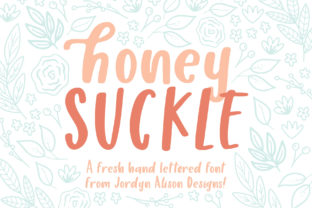
Honey Suckle is a fresh, playful script font designed with lightness, warmth, and romantic charm in mind. It belongs to the handwritten script category but distinguishes itself through its airy letterforms, subtle bounce, and consistent yet relaxed rhythm. Unlike dense or highly ornate scripts, Honey Suckle maintains legibility at moderate sizes while retaining expressive character—making it suitable for both digital and print applications.
For designers, crafters, and small business owners evaluating typefaces, Honey Suckle represents one option among many script fonts—but its specific qualities make it worth closer inspection. Understanding where it excels—and where it may fall short—helps ensure informed, purpose-driven decisions.
Why Consider Honey Suckle?
People often seek Honey Suckle when they need a typeface that conveys approachability, softness, or gentle personality without appearing overly formal or stiff. Its light weight and open counters support a sense of airiness, which pairs well with minimalist layouts or delicate visual themes. Common use cases include:
- Branding for lifestyle, wellness, or boutique businesses (e.g., candle makers, herbal tea labels, wedding stationery)
- Handmade product packaging and tags
- Social media graphics emphasizing warmth and authenticity
- Invitations, greeting cards, and personal correspondence
These contexts benefit from typography that feels intentional but not imposing—where tone matters as much as readability.
Key Benefits of Honey Suckle
Honey Suckle’s primary strengths lie in its emotional resonance and stylistic consistency. Its letters flow naturally, with slight variations in stroke thickness and terminal treatments that suggest hand-drawn authenticity without sacrificing cohesion. This makes it effective for short-form text—such as logos, headlines, or decorative quotes—where visual impact and mood are priorities.
The font includes standard Latin characters, numerals, and basic punctuation. Some versions offer ligatures and alternate glyphs, adding flexibility for refined typographic control. Its relatively generous x-height improves recognition at smaller display sizes compared to narrower, more condensed scripts.
Additionally, Honey Suckle tends to pair well with clean, neutral sans-serifs (e.g., Inter, Lato, or Montserrat) or soft serif companions (e.g., Cormorant Garamond or Playfair Display). This versatility supports balanced hierarchy in multi-font layouts.
Tradeoffs and Practical Considerations
Like most script fonts, Honey Suckle is not optimized for extended reading. Its connected letterforms and variable spacing reduce legibility in body text or interface elements requiring quick scanning—such as navigation menus, forms, or long paragraphs. Users should avoid deploying it for functional text unless paired with a highly legible secondary font.
Another consideration is licensing. Honey Suckle is typically distributed under commercial licenses, and usage rights vary by vendor. Some versions allow web embedding; others restrict use to desktop applications only. Always verify license terms before integrating into client work or public-facing platforms.
Technical performance is generally reliable, but users working with older browsers or limited CSS font-loading capabilities may encounter fallback issues if web fonts aren’t properly declared. Testing across devices remains essential, especially where rendering engines handle script fonts inconsistently.
When Honey Suckle Is a Strong Fit
Honey Suckle works best when the goal is to reinforce a specific aesthetic or emotional impression—not when neutrality or universal clarity is required. It shines in projects where typography functions as part of the brand voice rather than just a vehicle for information.
Examples include:
- A small-batch soap brand aiming to evoke natural ingredients and handmade care
- A wedding planner designing custom invitations that reflect intimacy and elegance
- An independent artist labeling original prints or zines with a personal, tactile feel
In each case, Honey Suckle supports the message by enhancing—not competing with—the overall design intent.
When Alternatives May Be More Appropriate
Not every project calling for a “friendly” or “romantic” script benefits from Honey Suckle specifically. If your needs include:
- Greater contrast or bold presence: Fonts like Bellota or Great Vibes offer stronger visual weight and tighter spacing for high-impact headlines.
- Improved multilingual support: Honey Suckle covers basic Latin characters but lacks extended language sets (e.g., Central/Eastern European diacritics, Cyrillic, or Greek). Alternatives such as Parisienne or Shadows Into Light may provide broader character coverage.
- Strict accessibility requirements: For users relying on screen readers or needing high-contrast interfaces, even decorative headings benefit from semantic HTML and clear font pairing. In such cases, a simpler script—or a carefully chosen display serif—may serve usability goals better.
Also consider budget constraints: while Honey Suckle is available from multiple reputable foundries, some free alternatives (e.g., Dancing Script or Architects Daughter) deliver comparable lightness and playfulness at no cost—though with fewer stylistic variants or licensing flexibility.
Making an Informed Choice
Evaluating Honey Suckle isn’t about determining whether it’s “good” or “bad,” but whether it aligns with your project’s functional and expressive requirements. Start by clarifying your core objectives:
- What role does typography play in this project? (e.g., branding reinforcement vs. information delivery)
- How much text will appear in this font? (Headlines only? Captions? Full sentences?)
- Who is the intended audience—and what level of familiarity or accessibility do they need?
- What technical environment will host the font? (Web, mobile app, print PDF, embroidery software?)
If Honey Suckle meets those criteria—and complements your existing palette and voice—it’s likely a sound choice. If not, use its characteristics as a reference point: look for fonts with similar weight, rhythm, and warmth, then test them in context before committing.
Ultimately, typography choices reflect intentionality. Honey Suckle offers a distinct flavor—one rooted in lightness and quiet expressiveness. Recognizing its scope and limits helps ensure it enhances your work rather than detracts from it.