Honeygrammy: A Playful, Curl-Filled Sans Serif
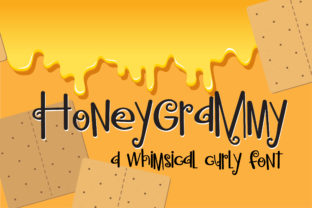
If you've ever scrolled through a font library and paused at one that feels like sunshine in typeface form—you’ve probably just met Honeygrammy. This whimsical sans serif font features youthful curls throughout: soft loops on lowercase a, g, and y; gentle swashes on capital J and Q; and an overall bounce that’s friendly without being childish. It’s not a script—and it’s not a rigid geometric sans. It lives somewhere joyful and approachable in between.
What Makes Honeygrammy Stand Out (Without Trying Too Hard)
Honeygrammy was designed with warmth in mind—not just visual warmth, but emotional resonance. Its curves aren’t exaggerated for flair; they’re intentional invitations to pause, smile, and connect. Unlike many playful fonts that sacrifice readability at small sizes, Honeygrammy maintains clarity even at 14px in body text—making it unusually versatile for both headlines *and* short-form captions.
Think of it as the typeface equivalent of a well-timed laugh in a conversation: light, human, and memorable. That’s why creators—from indie stationery makers to educators designing classroom posters—reach for Honeygrammy when they want personality *without* pretense.
Where Honeygrammy Fits Into Real Life (and Real Work)
You don’t need to be a designer to get value from Honeygrammy. Here’s how people actually use it:
- Small business owners use it for Instagram story highlights, café chalkboard menus, or boutique packaging labels—where charm matters more than corporate polish.
- Educators apply it in printable worksheets, digital slide decks, or welcome banners for early-grade classrooms. Its open letterforms support emerging readers without looking “babyish.”
- Bloggers and content creators pair it with clean serifs (like Merriweather or EB Garamond) for contrast—using Honeygrammy for pull quotes, section dividers, or newsletter headers to add voice and variation.
- Freelancers and marketers choose it for client-facing mood boards, pitch decks, or email subject lines where standing out—gently—is the goal.
It’s also a quiet favorite among wedding stationers and hobbyist crafters. A Honeygrammy “Save the Date” card feels personal, not templated. A handmade soap label set in Honeygrammy tells customers, “This was made with care—not mass-produced efficiency.”
What It Solves (That You Might Not Have Named)
Many people struggle with fonts that feel either too stiff or too chaotic. Honeygrammy bridges that gap. It helps solve:
- The “I want it to feel special—but not silly” dilemma: Its curls are subtle enough for professional contexts, yet distinctive enough to avoid blending into the background.
- The “My brand feels generic” problem: Even small touches—like using Honeygrammy for your website’s CTA button text or blog post subtitles—add recognizable texture over time.
- The “I’m not a designer, but I need something better than Arial” need: It installs and works like any standard font—no special software or licensing hurdles for basic use.
Practical Things to Keep in Mind Before You Use It
Honeygrammy shines brightest when used with intention—not excess. Here’s what helps it land well:
First, pair it wisely. Because of its character, it pairs best with neutral, grounded fonts: think Roboto, Inter, or Source Sans Pro for body copy. Avoid stacking it with other highly decorative or script-like fonts—that can overwhelm rather than delight.
Second, consider spacing. Its natural rhythm thrives with generous letter-spacing in headings (try +40–60 tracking in design tools), but tight settings can make the curls compete visually. If you’re using it in CSS, test line-heights between 1.4 and 1.6 for optimal legibility.
Third, check licensing. Honeygrammy is available in both free and premium versions. The free version covers personal projects and small websites—great for bloggers or students building portfolios. For commercial use (like selling branded merch or embedding in apps), the full license ensures legal safety and often includes expanded weights and language support.
And finally—trust your eye, not just the trend. Just because a font feels fun doesn’t mean it fits every message. Honeygrammy may not suit a law firm’s annual report or a cybersecurity startup’s homepage. But it’s perfect for a children’s book illustrator launching a Patreon, a yoga studio updating its class schedule, or a food blogger sharing a new recipe series titled “Sweet & Simple.”
A Few Realistic Examples You Can Try Today
- Create a social media carousel for your small business: Use Honeygrammy for slide titles (“Our Story,” “Why We Bake Daily,” “Meet the Team”) over warm-toned photos. Keep body text in a simple sans serif—let Honeygrammy do the emotional lifting.
- Design a printable habit tracker for your personal wellness goals. Honeygrammy’s rounded forms soften the structure of checkboxes and dates—making consistency feel kinder, not stricter.
- Add Honeygrammy to your email signature as a subtle accent—just your name or title in the font, while the rest stays clean and professional. It adds warmth without sacrificing credibility.
One thing users consistently notice? Honeygrammy makes digital spaces feel more human. In a world of algorithmic feeds and AI-generated content, choosing a font with visible hand-drawn warmth—even digitally rendered—is a small act of authenticity. It signals care in the details, even if no one names it outright.
So whether you're sketching ideas on paper, building a Shopify store, drafting a lesson plan, or simply refreshing your personal website—it’s worth asking: Does this feel like me? If the answer leans toward warm, welcoming, and quietly confident, Honeygrammy might just be the typeface you didn’t know you were waiting for.