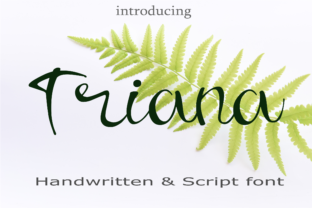
Triana: The Handwritten Font That’s Redefining Authenticity in Digital Design
In an era where digital saturation is at an all-time high—where interfaces are sleek, algorithms optimize engagement, and AI generates visuals in seconds—the human touch has become not just desirable, but essential. Enter Triana: a simple and versatile handwritten font perfectly tailored for adding that unique, unmistakably human touch to a wide variety of design projects. It isn’t flashy or overly stylized. It doesn’t try to mimic calligraphy masters or replicate brushstroke drama. Instead, Triana offers something rarer in today’s typographic landscape: quiet confidence, consistent warmth, and effortless legibility—all rooted in the natural rhythm of handwriting.
What Makes Triana More Than Just Another Handwritten Font?
At its core, Triana is a carefully crafted typeface designed with intention—not ornamentation. Its letterforms balance irregularity and structure: subtle variations in stroke weight, gentle slant consistency, and open counters that ensure readability even at smaller sizes. Unlike many handwritten fonts that sacrifice functionality for flair, Triana was built for real-world use—from email subject lines and social media captions to packaging labels and presentation decks.
What sets Triana apart is its versatility without compromise. It works equally well in minimalist branding systems and expressive editorial layouts. It pairs naturally with clean sans-serifs (like Inter or Helvetica Neue) for contrast that feels intentional, not forced—and it holds its own alongside serif companions when warmth and approachability are strategic priorities.
The Rise of Human-Centered Typography in a Machine-Driven World
Typography is no longer just about aesthetics—it’s a signal. In marketing, product design, and content strategy, font choice communicates values before a single word is read. As consumers grow increasingly skeptical of polished, corporate-perfect messaging, brands are shifting toward authenticity as a competitive differentiator. This isn’t nostalgia—it’s responsiveness. Research from the Journal of Consumer Psychology shows that perceived authenticity increases trust by up to 42% and significantly improves message retention, especially among Gen Z and younger millennials.
Triana fits squarely into this evolution. Its handwritten quality doesn’t suggest “amateur” or “unpolished”—rather, it signals intentional humanity. When a fintech startup uses Triana in its onboarding emails, it softens the cognitive load of financial complexity. When a sustainable skincare brand applies Triana to ingredient callouts on product packaging, it reinforces transparency and care. These aren’t stylistic afterthoughts—they’re strategic decisions grounded in how people actually process visual information today.
Why Designers and Marketers Are Choosing Triana Now
Several converging trends explain Triana’s growing relevance:
- Remote collaboration demands clarity and character. With teams distributed across time zones and tools like Figma, Notion, and Canva becoming standard, designers need fonts that render consistently across platforms—and still carry personality. Triana’s robust OpenType features and web-optimized variants make it reliable in both code-driven and drag-and-drop environments.
- Content velocity requires adaptable assets. Entrepreneurs and freelancers often produce dozens of touchpoints weekly—Instagram carousels, newsletter headers, pitch decks, landing page banners. Triana’s balanced x-height and generous spacing mean it scales gracefully from mobile screens to large-format prints without re-kerning or manual adjustment.
- AI-generated visuals create demand for human anchors. As generative tools flood feeds with hyper-saturated, algorithmically optimized imagery, text becomes a critical grounding element. Triana provides visual continuity and emotional resonance—acting as a subtle but persistent signature of human authorship amid synthetic abundance.
Triana in Action: Practical Applications Across Industries
Real-world usage reveals Triana’s strategic flexibility. Consider these examples:
- Educational Platforms: A language-learning app uses Triana for exercise instructions and feedback messages. Its friendly, non-intimidating appearance lowers anxiety around mistakes—supporting pedagogical goals while reinforcing brand voice.
- Local Service Businesses: A boutique bakery embeds Triana in its Google Business profile banner and printed loyalty cards. The font bridges digital discovery and physical experience, making online interactions feel as personal as handing over a warm croissant.
- B2B SaaS Onboarding: A project management tool replaces generic system fonts with Triana in welcome modals and milestone celebrations. Users report higher perceived empathy from the product—translating into stronger activation metrics and reduced early churn.
- Creative Freelancers: Illustrators and copywriters use Triana in portfolio thumbnails and client proposals—not as decoration, but as tonal calibration. It quietly communicates craft, attention to detail, and collaborative spirit before the first meeting begins.
Workflow Integration: Designed for How People Actually Work
Triana wasn’t developed in isolation from practice—it was refined alongside real workflows. Its variable font version supports seamless weight and width adjustments directly in CSS or design tools, eliminating the need to manage multiple files. Its licensing model includes commercial use across digital, print, and merchandise—removing friction for solopreneurs launching merch lines or agencies building multi-channel campaigns.
Importantly, Triana avoids common pitfalls of handwritten fonts: no excessive ligatures that break copy-paste functionality, no unpredictable baseline shifts that disrupt grid alignment, and no stylistic alternates that require manual selection per word. It respects the designer’s time—and the end user’s expectation of consistency.
Looking Ahead: Typography as Trust Infrastructure
As interface design continues to evolve—toward voice, gesture, spatial computing, and ambient intelligence—the role of typography will only deepen. Text remains the most universal, accessible, and interpretable layer of digital communication. Fonts like Triana represent more than stylistic preference; they’re part of what we might call trust infrastructure: the subtle, systemic choices that shape whether users feel seen, respected, and understood.
This shift isn’t about rejecting technology—it’s about refining it. Triana coexists with automation, enhances AI outputs, and strengthens data-driven storytelling by ensuring the human dimension remains visible, legible, and resonant. For professionals navigating complex stakeholder expectations, tight deadlines, and evolving platform requirements, Triana delivers reliability *and* distinction—without demanding trade-offs.
Final Thought: Simplicity, Done Right, Is Strategic
In creative work, simplicity is often mistaken for minimal effort. But Triana proves otherwise: its restrained elegance emerges from deep understanding of letterform anatomy, contextual legibility, and behavioral psychology. It doesn’t shout. It invites. It doesn’t distract. It clarifies. And in a world where attention is scarce and authenticity is scrutinized, that kind of quiet effectiveness isn’t just refreshing—it’s indispensable.
Whether you're a marketer crafting a campaign that balances performance and personality, a founder building a brand rooted in real connection, or a designer bridging aesthetic vision with technical execution, Triana offers more than visual appeal. It offers alignment—between intent and impact, between craft and clarity, between what you say and how people feel when they read it.