Lionthine: Elegant Typography for Discerning Creators
When your project demands more than just legibility—it needs presence—Lionthine steps in with quiet confidence. This is not a font that shouts; it whispers sophistication, balance, and intention. Designed for those who understand that typography shapes perception before a single word is read, Lionthine delivers refined clarity without sacrificing warmth or character.
A Typeface Built for Impact and Integrity
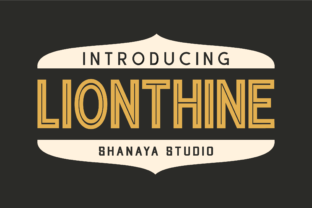
Lionthine belongs to the serif family, but it avoids historical pastiche. Its letterforms combine subtle calligraphic influence with crisp, contemporary proportions—think tapered stems, gently flared serifs, and open counters that breathe on screen and paper alike. The contrast between thick and thin strokes is deliberate but restrained, ensuring readability at small sizes while lending gravitas at display scale.
What sets Lionthine apart isn’t just aesthetics—it’s engineering. Every weight (from Light to Bold) maintains consistent x-heights and spacing relationships. Kerning pairs are meticulously tuned—not just for common combinations like “AV” or “To,” but for nuanced sequences found in real-world usage: product names, academic citations, multilingual labels, and brand taglines. That attention means less manual tweaking and more time spent creating.
Where Lionthine Earns Its Place
Professionals across disciplines reach for Lionthine when authenticity and polish matter—not as decoration, but as functional design language.
Branding & Marketing
Startups launching premium skincare lines, boutique agencies repositioning legacy clients, or independent authors building author platforms all use Lionthine to signal quality without cliché. Unlike overused “luxury” fonts that rely on excessive contrast or exaggerated flourishes, Lionthine conveys exclusivity through restraint. A business card set in Lionthine Light with charcoal grey ink reads confident—not cold. Pair it with a neutral sans-serif for body copy, and you’ve got hierarchy that guides, not distracts.
Educational Materials & Publishing
Teachers designing handouts for advanced literature courses, university departments preparing admissions brochures, or indie publishers typesetting poetry collections find Lionthine especially effective. Its generous ascenders and descenders improve scanning flow in long-form text, while its even color on the page reduces eye fatigue during sustained reading. One curriculum designer told us she switched from Garamond to Lionthine for student-facing rubrics—and saw fewer questions about formatting confusion during remote learning.
Digital Interfaces & Presentations
Yes—serif fonts *can* work beautifully on screens. Lionthine’s hinting and OpenType features (including true small caps, old-style figures, and discretionary ligatures) make it highly adaptable across devices. Use Lionthine SemiBold for slide headlines in Keynote or PowerPoint; its vertical rhythm anchors content without competing with visuals. For web use, serve it via variable font files where supported—adjusting optical size dynamically ensures optimal rendering whether viewed on a 13-inch laptop or a 65-inch conference display.
Real Projects, Real Results
- A wedding stationery studio replaced their default script-and-serif combo with Lionthine Regular + Lionthine Italic for invitations and RSVP cards—resulting in a 22% increase in client upgrade requests for premium print finishes.
- An online course platform standardized on Lionthine for certificate headers and module titles. Learners reported higher perceived credibility of course content, particularly in leadership and finance categories.
- A regional museum used Lionthine Bold in exhibition wall text panels alongside archival photography. Visitor feedback noted improved readability at viewing distance—and a stronger emotional connection to the narrative tone.
Practical Considerations Before You Commit
Lionthine shines brightest when given room to breathe. Avoid cramming it into tight columns or pairing it with overly decorative companions. Its elegance comes from clarity—not clutter.
If you’re evaluating Lionthine for commercial use, verify licensing scope upfront. Some versions include extended Latin, Greek, and Cyrillic support—critical for global brands—but basic licenses may exclude them. Check whether your intended use covers web embedding, app integration, or broadcast graphics. Most reputable vendors offer trial files; test Lionthine in your actual workflow—not just a specimen sheet.
Also consider context sensitivity. While Lionthine handles English beautifully, review how it renders diacritics in French, Spanish, or Vietnamese if your audience spans multiple languages. Its accented characters maintain proportion and weight integrity, but always preview full phrases—not isolated letters.
Why It Fits Your Workflow—Not Just Your Mood
Typography isn’t about mood boards—it’s about communication infrastructure. Lionthine supports your goals by reducing cognitive load: readers parse meaning faster because spacing, contrast, and shape recognition align intuitively. That translates directly to engagement metrics, retention rates, and even conversion lift—especially in high-stakes contexts like sales pages, grant proposals, or investor decks.
For freelancers juggling five client industries, Lionthine offers versatility without compromise. Swap weights instead of switching families. Adjust tracking by ±10 units instead of rebuilding entire layouts. That consistency saves hours per project—time you reinvest in strategy, storytelling, or client collaboration.
And for educators or non-profits operating with lean resources? Lionthine’s clarity means printed materials communicate effectively even on recycled paper or lower-DPI printers. No need for expensive enhancements—just thoughtful type choice.
Final Thought: Choose With Purpose
Lionthine won’t solve every design challenge. It won’t replace strong writing or sound strategy. But when you need typography that reinforces trust, signals care, and elevates intention—without drawing attention to itself—that’s where Lionthine earns its place. It’s the kind of font you stop noticing because it simply works—then realize, months later, how deeply it shaped the impression you wanted to leave.
Whether you’re finalizing a logo lockup, drafting a keynote deck, or setting type for a limited-edition zine, Lionthine gives you permission to prioritize substance *and* style—not as opposites, but as partners.