Recobant: The Elegant, Authentic Sans Serif That Fits Right In
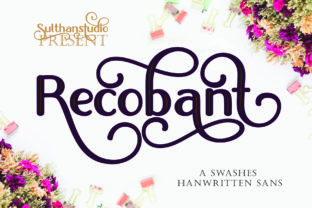
Recobant isn’t just another pretty font—it’s the kind of typeface that feels like it was designed for real life. With its graceful curves, confident rhythm, and quiet confidence, Recobant lands somewhere between refined and approachable. It’s fancy enough to elevate a luxury brand identity, yet warm and grounded enough to feel at home on a handmade greeting card or a small-batch product label. What makes it especially useful? It doesn’t try too hard. It simply works—across contexts, audiences, and intentions.
Where Recobant Shines in Everyday Design
Think about the last time you needed a font that could do more than one thing well. Maybe you were designing a wedding invitation suite—and wanted something elegant but not overly formal. Or perhaps you were updating your freelance portfolio site and needed a typeface that felt professional without feeling cold or corporate. Recobant steps into those moments naturally.
For crafters and makers, Recobant adds instant polish to seasonal projects. Imagine hand-lettered holiday tags, spring-themed planner stickers, or summer market banners—its subtle swashes and alternate glyphs give each piece personality without requiring advanced typography skills. Because it’s PUA encoded, all those extras (like flourished capitals or contextual ligatures) appear with a single keystroke—not buried in glyph panels or complex OpenType settings. That means less fiddling, more making.
Real People, Real Projects
A boutique stationery designer in Portland uses Recobant for client-facing branding kits—especially when clients want “timeless, not trendy.” Its clean structure reads beautifully at small sizes (think business cards or packaging copy), while its extended character set supports multilingual names and special accents—crucial when serving diverse communities.
Meanwhile, a graphic designer building a rebrand for a local coffee roaster chose Recobant for its warmth and legibility. The logo uses a custom-swashed “R,” the menu relies on its friendly lowercase forms, and even the chalkboard-style social media graphics pull from its alternate glyphs to keep things fresh week after week. No two posts look identical—but they all feel unmistakably *of the same voice.*
Teachers and homeschooling parents also reach for Recobant when creating printable learning resources. Its open letterforms improve readability for early readers, and its joyful energy helps turn vocabulary flashcards or classroom posters into something students actually look forward to seeing. One third-grade teacher told us she prints Recobant-based spelling lists because her students “notice the little curls and ask about them”—turning typography into a quiet moment of engagement.
What Makes Recobant Feel So Authentic?
It’s not just about aesthetics. Authenticity here comes from balance: balanced weight distribution, balanced contrast between thick and thin strokes, balanced presence on the page. Recobant avoids the sterility of ultra-geometric sans serifs and the fussiness of over-decorated scripts. It has personality, yes—but never at the expense of clarity or function.
You’ll notice this most when pairing it with other fonts. Recobant plays well with both serif and sans serif companions. Try it with a sturdy text face like Merriweather for body copy, or layer it over a minimalist monospace for contrast in digital interfaces. Its versatility isn’t theoretical—it’s tested across print runs, screen resolutions, and real-world lighting conditions (yes, even under fluorescent classroom lights).
Practical Considerations Before You Use It
Like any tool, Recobant works best when matched to intention—not just visual preference. If your project demands extreme narrowness (like tight vertical labels) or ultra-bold impact (billboard-scale headlines), you may want to pair it with a complementary display font rather than stretch Recobant beyond its natural range. It’s designed for elegance and readability—not brute-force attention-grabbing.
Also worth noting: while its PUA encoding makes swashes easy to access in design apps like Illustrator or Affinity Designer, some web platforms or older CMS systems may not fully support those encoded characters unless properly embedded via @font-face or variable font loading. For web use, test how swashes render across devices—and consider using standard characters for critical navigation or CTAs, reserving flourishes for headings or decorative elements.
Licensing is straightforward—Recobant is typically offered with both desktop and web licenses, and many versions include commercial usage rights out of the box. Just double-check the license terms if you’re planning large-scale merchandise (like apparel or enamel pins), as some foundries require extended permissions for physical product reproduction.
Industries and Roles That Keep Coming Back to Recobant
- Wedding & Event Designers: Use its swash capitals for monograms and ceremony programs—then switch to its cleaner alternates for seating charts and menus.
- Educational Content Creators: Leverage its high legibility and joyful tone for worksheets, slide decks, and interactive PDFs—especially in early childhood and ESL contexts.
- Small-Business Owners: Apply it across touchpoints—logo, Instagram bios, email headers, and product tags—to build cohesive, human-scaled branding without hiring a full design team.
- Digital Product Teams: Use its consistent x-height and spacing for UI elements where friendliness matters—onboarding flows, dashboard headlines, or microcopy in SaaS tools.
- Book Cover Designers: Choose Recobant for literary fiction, memoirs, or wellness titles where tone and emotional resonance matter as much as genre cues.
A Font That Grows With Your Needs
One of the quiet strengths of Recobant is how it adapts—not by changing shape, but by revealing new layers as your project evolves. Start with its basic character set for a clean mockup. Later, swap in a ligature for a headline that needs extra flow. Add a swash for a signature line on a thank-you note. Introduce an alternate ‘a’ or ‘g’ to break visual repetition in a long quote.
That flexibility means you’re not locked into one version of your design. You can refine tone, adjust formality, or deepen personality—all without switching fonts. And because it’s built with real-world application in mind, those refinements don’t come at the cost of performance or compatibility.
If you’ve ever hesitated before choosing a font—wondering whether it will hold up across formats, resonate with your audience, or still feel right six months from now—Recobant offers a reassuring answer: yes, and yes, and yes. It’s not flashy. It doesn’t shout. But it stays present—in the margins, the headers, the quiet details—making everything it touches feel just a little more considered, a little more joyful, and unmistakably yours.