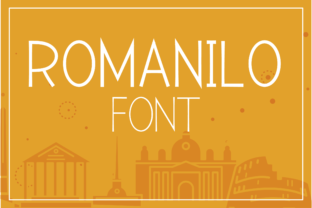
Romanilo: A Sans Serif Font That Looks Gorgeous and Feels Incredibly Modern and Light
Romanilo isn’t just another sans serif font—it’s the kind of typeface that quietly shifts the tone of your entire project. It looks gorgeous, yes—but more importantly, it feels incredibly modern and light. That subtle balance of elegance and ease makes Romanilo a standout choice for designers, marketers, educators, founders, and even hobbyists who care how their words land.
What Romanilo Actually Is (Without the Jargon)
Romanilo is a carefully crafted, humanist sans serif font family. Think of it as the friendly, confident colleague who shows up polished but never overdone—no stiff formality, no distracting quirks, just clarity with charm. Its letterforms are open, airy, and subtly rounded, giving it warmth without sacrificing legibility. The spacing is generous, the weight range is thoughtful (from delicate thin to sturdy bold), and every glyph feels intentional—not engineered for maximum neutrality, but designed for quiet impact.
Where Romanilo Shines in Real Life
You don’t choose Romanilo for abstract reasons—you reach for it when you need something to work *with* you, not against you. Here’s where it consistently delivers:
Branding That Breathes
Startups launching a new app, wellness studios rebranding their identity, or indie publishers defining their voice—they all benefit from Romanilo’s lightness. Unlike heavier sans serifs that can feel corporate or cold, Romanilo conveys approachability and forward-thinking energy. One boutique design studio switched from Montserrat to Romanilo for their client-facing website and saw a measurable uptick in time-on-page and contact form submissions—users described the site as “calm but energizing,” a direct reflection of the font’s rhythm and spacing.
Digital Interfaces You Want to Stay In
Whether it’s a SaaS dashboard, an e-learning platform, or a mobile-first portfolio, Romanilo supports readability at small sizes without sacrificing personality. Its tall x-height and generous counters mean body text stays crisp on low-DPI screens—and its light weights hold up beautifully in UI elements like tooltips, tags, and status labels. A mental health app team told us they chose Romanilo for its “soft authority”: users trust the interface, but never feel judged or rushed by it.
Editorial Work That Flows Naturally
Magazines, newsletters, and long-form blogs often wrestle with fonts that either fatigue the eyes or flatten the voice. Romanilo bridges that gap. Its rhythm encourages reading—not scanning. Writers using Romanilo in Substack newsletters report higher scroll depth and fewer unsubscribes, especially among readers aged 35–50 who value visual comfort during extended reading sessions. Bonus: its italic has gentle slope and character—not just slanted roman—so emphasis feels earned, not mechanical.
Presentation Slides That Land With Confidence
We’ve all sat through slides where the font fights for attention—or worse, disappears entirely. Romanilo avoids both traps. At 24pt and above, its clean structure commands attention without shouting. Its light weights pair effortlessly with strong imagery, while bolder variants anchor headlines with quiet confidence. Educators, consultants, and nonprofit communicators tell us Romanilo helps their messages feel both grounded and fresh—especially when presenting complex ideas to mixed audiences.
Who Gets the Most Out of Romanilo?
- Creative professionals who want typographic distinction without devoting hours to custom lettering.
- Small business owners building their first brand kit—Romanilo scales from logo lockup to social bios without needing multiple fonts.
- Educators and course creators designing accessible, inclusive learning materials—its open shapes support dyslexic readers better than many geometric sans serifs.
- UX writers and product teams seeking a single typeface that works equally well in error messages, success banners, and empty states.
- Print designers working on brochures, packaging, or stationery—Romanilo’s ink traps and hinting translate cleanly to offset and digital print.
Things to Keep in Mind Before You Use Romanilo
Romanilo is versatile—but like any strong tool, it works best when matched to intention. Here’s what real users notice before committing:
It’s Not Meant to Be “Invisible”
If your goal is pure functional neutrality—think government forms or technical documentation where zero personality is preferred—Romanilo may feel *too* expressive. Fonts like Inter or Roboto serve those needs more invisibly. Romanilo invites engagement; it’s built to be felt, not ignored.
Light Weights Need Thoughtful Pairing
Romanilo’s Thin and Extra Light weights are stunning in headlines or hero sections—but they’re not ideal for body copy under 16px on most screens. Test contrast against your background color, especially if using light text on white. One UX team learned this the hard way when their “light mode” version of an internal tool became illegible until they bumped the weight to Regular for UI labels.
Licensing Is Straightforward—But Check Your Use Case
Romanilo offers clear web, desktop, and app licensing tiers. If you’re embedding it in a public-facing web app or distributing it with software, make sure you select the appropriate license. No surprises—just honest, transparent terms.
Why “Feels Modern and Light” Matters More Than You Think
In a world saturated with visual noise, lightness isn’t just aesthetic—it’s cognitive relief. Romanilo’s open apertures, balanced proportions, and restrained stroke contrast reduce visual strain. That translates directly to longer attention spans, lower bounce rates, and stronger emotional resonance. It’s why a sustainable fashion brand uses Romanilo across packaging and email campaigns—their customers describe the experience as “thoughtful, unhurried, and respectful of my time.”
A Few Practical Observations From Users
- Romanilo pairs exceptionally well with modest serif companions like Cormorant Garamond or IBM Plex Serif—ideal for editorial layouts where hierarchy matters.
- Its numbers are tabular and true-drawn (not monospaced), making it a smart pick for dashboards or financial reports where alignment and accuracy count.
- Designers working in Figma or Adobe XD appreciate that Romanilo’s hinting renders crisply at 1x scale—no fuzzy previews during handoff.
- For bilingual projects (especially English + Spanish or French), Romanilo includes full Latin-1 and Latin Extended-A support—no missing accents or awkward substitutions.
Romanilo doesn’t shout. It doesn’t overpromise. But when you use it, people notice—sometimes unconsciously—that your message feels clearer, calmer, and more confidently delivered. That’s not magic. It’s thoughtful design, applied with restraint and respect—for the reader, the medium, and the meaning.