Mausoleum: A Hand-Crafted Script for Meaningful Making
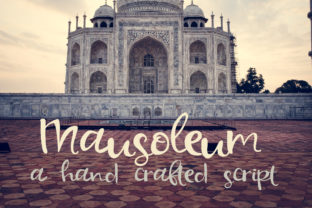
When you’re choosing a font—not just for aesthetics but for intention—the right script can quietly shape how your message lands, how your craft feels, and even how focused you stay during creative work. Mausoleum is one such typeface: a casual, hand-crafted script with medium weight that bridges warmth and clarity without sacrificing legibility or personality. It’s not designed to shout—it’s made to resonate.
Why “Hand-Crafted” Matters More Than You Think
In a world saturated with hyper-polished digital assets, a font like Mausoleum offers something increasingly rare: human texture. Its slight irregularities—subtle variations in stroke thickness, gentle tapering on terminals, and organic rhythm across letterforms—mirror the natural flow of handwriting. That’s not a flaw; it’s functional. For educators designing classroom handouts, freelancers illustrating client mood boards, or journalers filling a physical notebook, that tactile authenticity helps ground the experience. It signals care—not perfection—and invites engagement rather than passive scanning.
Unlike ultra-thin scripts that vanish at small sizes or heavy display fonts that overwhelm body text, Mausoleum’s medium weight gives it quiet versatility. It holds up well at 14–18pt in printed journals, reads cleanly on tablet screens during digital sketching sessions, and scales gracefully when used as a secondary headline beside a neutral sans-serif like Inter or Lato.
Where Mausoleum Fits Naturally—And Where It Doesn’t
This isn’t a universal solution. Mausoleum shines where tone, intention, and context align. Consider these real-world fits:
- Crafting & DIY projects: Hand-lettered tags for handmade candles, embroidery patterns with stitched-style labels, or printable planner stickers—Mausoleum adds cohesion without looking “designed.” Its casualness matches the ethos of making by hand.
- Personal journaling: Whether you’re using a fountain pen or typing into a minimalist app like Day One or Obsidian, Mausoleum supports reflection. Its open counters and generous x-height make long-form writing feel less dense, especially in narrow columns or margin notes.
- Small business storytelling: A local bakery updating its Instagram Stories with seasonal specials, a ceramicist labeling product photography, or a wellness coach designing a printable gratitude prompt—Mausoleum conveys approachability while still feeling intentional and owned.
It’s less suited for dense legal disclaimers, multilingual interfaces with complex diacritics (its character set is English-optimized), or high-contrast accessibility scenarios requiring extreme stroke contrast. If your audience relies heavily on screen readers or needs WCAG AA+ compliance for body copy, pair Mausoleum with a tested accessible font for primary text—and reserve it for headings, quotes, or decorative emphasis.
How It Supports Creative Flow—Without Getting in the Way
Many creators report slowing down when working with overly rigid or technically precise fonts—there’s pressure to “get it right,” which interrupts intuition. Mausoleum sidesteps that friction. Its relaxed proportions and consistent rhythm reduce visual decision fatigue. When you’re sketching a brand concept or drafting a workshop handout, fewer micro-adjustments mean more momentum.
One freelance educator told us she switched from a popular brush script to Mausoleum for her student-facing worksheets because “it felt like I was writing *with* my students, not *at* them.” That subtle shift—from performance to presence—is part of what makes Mausoleum effective. It doesn’t demand attention; it earns it through consistency and warmth.
Practical Pairing Tips (That Go Beyond “Use Sans-Serif With Script”)
Pairing Mausoleum well isn’t about rules—it’s about resonance. Try these grounded combinations:
- With a warm, low-contrast serif (e.g., Literata or PT Serif): Ideal for print zines, poetry chapbooks, or slow-content newsletters. The serif grounds Mausoleum’s informality while preserving literary tone.
- With a clean, slightly rounded sans (e.g., Manrope or Nunito): Works beautifully for modern service-based websites—think coaching bios, course syllabi, or boutique studio landing pages—where friendliness and professionalism coexist.
- With itself, at different weights (if available): While Mausoleum currently ships as a single-weight script, using size, spacing, and color contrast thoughtfully creates hierarchy. A 24pt Mausoleum headline over 16pt Mausoleum subhead (with increased letter-spacing) feels intentional—not repetitive.
Avoid pairing it with other high-contrast scripts or tightly spaced geometric sans-serifs (like Montserrat Bold). The visual tension can feel unintentional, not dynamic.
What Users Notice After a Week of Use
Feedback from designers, writers, and makers consistently highlights three shifts:
- Increased time spent refining layout, less time second-guessing tone. Because Mausoleum carries expressive weight on its own, users spend less energy adding decorative elements to “soften” harsh typography.
- More willingness to iterate by hand first. Several journalers mentioned scanning handwritten drafts into apps like GoodNotes, then overlaying Mausoleum for polish—using the font as a bridge between analog and digital, not a replacement.
- Fewer revisions requested by clients on visual tone. Small business owners reported clearer alignment during early design reviews, especially when Mausoleum was used in brand voice documents alongside sample captions and email headers.
A Note on Licensing and Real-World Use
Mausoleum is offered under a standard desktop + web license suitable for most independent creators and small teams. If you’re embedding it into a SaaS platform, distributing editable templates commercially, or using it in an app with user-generated content, review the license terms directly—you’ll want to confirm whether extended use rights apply. For most bloggers, educators, and solopreneurs, the standard license covers common workflows: Canva presentations, Notion dashboards, PDF workbooks, and static website headlines.
It’s also worth noting: Mausoleum isn’t built for rapid iteration across dozens of languages or niche symbols. If your project requires Cyrillic, Greek, or extended punctuation support, check the specimen file before committing. Its strength lies in focused, English-dominant expression—not breadth.
Final Thought: Tools Shape Habits
You don’t need Mausoleum to create meaningfully. But if you find yourself reaching for fonts that feel either too stiff or too chaotic—if your journal pages look disconnected from your social posts, or your client decks lack a consistent emotional thread—then a script like Mausoleum may do more than decorate. It may help unify your output around a quieter, more considered sensibility. Not flashy. Not fussy. Just present—like your best ideas often are.