Permata: A Modern Handwritten Font for Expressive Design
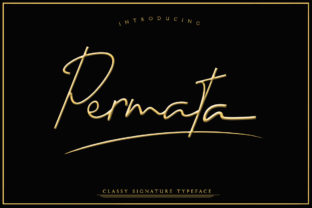
When you're choosing a font that balances personality with professionalism, Permata stands out—not as just another script typeface, but as a thoughtfully crafted tool for visual storytelling. Designed with authenticity in mind, The Permata is a modern handwritten font that brings warmth, rhythm, and intention to every letterform. It’s not about mimicking pen-on-paper imperfection for its own sake; it’s about offering expressive control without sacrificing clarity or versatility.
What Makes Permata Distinctive?
At first glance, Permata feels familiar—like handwriting you might admire in a well-designed boutique logo or a hand-lettered wedding invitation. But look closer, and you’ll notice the care embedded in its construction: subtle contrast in stroke weight, graceful entry and exit strokes, and an organic flow that guides the eye naturally from one character to the next.
One of Permata’s defining features is its collection of beautiful swashes. These aren’t decorative afterthoughts—they’re purpose-built alternates designed to enhance hierarchy, add emphasis, or create visual interest at key moments (like the beginning of a headline or the final flourish of a signature). Each swash is carefully spaced and weighted to integrate seamlessly with the base characters, avoiding the “tacked-on” feel common in less-refined script fonts.
Unlike many handwritten fonts that lean heavily into casual informality, Permata maintains a grounded elegance. Its lowercase ‘a’, ‘g’, and ‘y’ feature open, legible forms—even at smaller sizes—and its uppercase letters carry presence without stiffness. That balance makes it unusually adaptable across contexts: equally at home on a minimalist business card and a vibrant festival poster.
Where Does Permata Shine in Real Projects?
Permata isn’t limited to one niche. Its strength lies in how it bridges creative expression with functional communication. Here are several practical applications where users consistently report strong results:
- Logotype & Branding: Small businesses, lifestyle brands, and creative studios use Permata to convey approachability and craftsmanship—especially when paired with a clean sans-serif for supporting text.
- Digital Lettering Art: Illustrators and social media designers appreciate its OpenType features (including contextual alternates and ligatures), which allow for natural-looking phrases without manual tweaking.
- Apparel & Merchandise: Because of its confident x-height and generous spacing, Permata scales beautifully on t-shirts, tote bags, and enamel pins—even in single-color prints.
- Print Collateral: From wedding stationery to café menus and event posters, Permata adds human-centered charm without compromising readability at arm’s length.
- Web & UI Elements: When used sparingly—as hero text, button labels, or section headers—Permata elevates digital interfaces while remaining web-safe with proper fallbacks.
Who Benefits Most from Using Permata?
While anyone can enjoy Permata, certain creators and professionals find it especially valuable:
- Freelance designers who juggle branding, social content, and print projects—and need one reliable script font that performs across mediums.
- Small business owners launching their first brand identity and seeking a distinctive yet trustworthy voice.
- Content creators building cohesive visual aesthetics for Instagram, Pinterest, or YouTube thumbnails—where recognition and tone matter as much as clarity.
- Educators and workshop facilitators crafting handouts or presentation slides that feel inviting and personal—not sterile or overly formal.
- Non-designers using tools like Canva or Adobe Express: Permata works intuitively with built-in font managers and requires minimal customization to look polished.
Strengths—and Honest Considerations
Like any design tool, Permata excels within its intended scope—and knowing those boundaries helps you use it more effectively.
Key strengths include:
- Expressive flexibility: Swashes and alternates give you room to tailor tone—playful, refined, romantic, or bold—without switching fonts.
- Cross-platform compatibility: Available in OTF and WOFF2 formats, with full language support covering Latin-based scripts (including accented characters used in French, Spanish, Portuguese, and Indonesian).
- Low learning curve: No advanced typography knowledge needed. Even basic font menus reveal usable swashes via stylistic sets.
- Print-ready consistency: Kerning pairs are tested across point sizes, so headlines stay balanced whether output to screen or offset press.
Realistic considerations to keep in mind:
- Not ideal for long-form body text: Like most script fonts, Permata is best reserved for headings, quotes, logos, and short phrases—not paragraphs or dense captions.
- Requires thoughtful pairing: To avoid visual competition, pair it with neutral, highly legible typefaces—think geometric sans-serifs (e.g., Inter, Poppins) or restrained serifs (e.g., Lora, Merriweather).
- May need manual spacing adjustments in some layout apps—especially when mixing swash capitals with lowercase words. A quick kerning tweak often solves this.
- Limited stylistic variants: Permata doesn’t include bold, italic, or condensed versions—so if your project demands heavy typographic hierarchy, plan accordingly (e.g., use size, color, or weight contrast instead).
How to Evaluate If Permata Fits Your Project
Before licensing or downloading, ask yourself these practical questions:
- Is legibility at my intended size and medium a priority? Try setting your key phrase in Permata at the actual size it will appear—on screen or in print—and step back. Does it read instantly—or does it invite pause and interpretation? Both can be right, depending on context.
- Does my message benefit from warmth and humanity? If your goal is authority, urgency, or technical precision, a crisp sans-serif may serve better. But if you want to signal care, creativity, or connection, Permata reinforces that intent visually.
- Do I have access to OpenType-aware software? While Permata works in basic editors, unlocking its full potential (swashes, ligatures, stylistic sets) is easiest in Adobe Creative Cloud, Affinity apps, or modern web environments with @font-face support.
- Will this be used commercially? Confirm the license covers your use case—especially for merchandise, SaaS platforms, or client work where redistribution may apply.
A Final Thought: Fonts Are Tools—Not Magic
Permata won’t fix weak copy, compensate for poor layout, or guarantee viral engagement. But in skilled hands—and even in thoughtful beginner ones—it becomes a quiet collaborator: adding nuance to a brand voice, softening the edges of digital interfaces, or turning a simple phrase into something memorable.
What sets Permata apart isn’t just how it looks—it’s how it behaves. It respects the reader’s time with clear shapes. It rewards the designer’s attention with meaningful alternates. And it invites collaboration rather than demanding perfection.
If you’ve been searching for a handwritten font that feels both intentional and alive—one that supports your goals instead of overshadowing them—Permata is worth your time. Not as a trend, but as a reliable, expressive part of your design toolkit.