Sallim Font: A Fresh, Handwritten Typeface for Modern Branding and Creative Design
Typography is far more than just choosing a “pretty” font—it’s a strategic design decision that shapes perception, conveys personality, and builds emotional connection. Among today’s most compelling typefaces, Sallim stands out as a fresh, expressive, and uniquely human option. Designed with authenticity in mind, Sallim isn’t just another script font—it’s a thoughtfully crafted handwritten typeface that balances spontaneity with usability, making it ideal for everything from luxury wedding invitations to bold product packaging and digital branding.
What Is the Sallim Font?
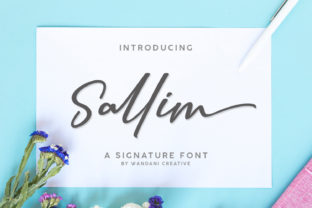
Sallim is a contemporary handwritten font family characterized by its natural flow, subtle variation in stroke weight, and organic rhythm. Unlike rigid calligraphic fonts or overly stylized brush scripts, Sallim captures the warmth and imperfection of real pen-on-paper writing—without sacrificing legibility or versatility. Its letters connect smoothly where appropriate, yet remain distinct enough for clear reading at small sizes and across diverse media.
Each glyph was drawn by hand and then carefully digitized to preserve texture, tilt, and nuance—no algorithmic interpolation or artificial embellishment. This craftsmanship gives Sallim an unmistakable sense of sincerity and approachability, qualities increasingly valued in today’s design landscape.
Why Sallim Stands Out in Today’s Typography Landscape
In an era saturated with minimalist sans-serifs and AI-generated “trendy” fonts, Sallim offers something rare: human-centered design. While many script fonts prioritize decorative flair over function, Sallim bridges the gap between aesthetic charm and practical utility. It works beautifully at large display sizes—think billboard headlines or apparel prints—but also holds up well in body text applications like greeting cards or editorial layouts.
Its uniqueness lies not only in appearance but in intention: Sallim was created to serve real-world creative needs—not just look good in a font showcase. That’s why it includes full Latin character sets, multilingual support (including accented characters), OpenType features like contextual alternates and ligatures, and optimized spacing for both print and screen rendering.
Practical Applications: Where Sallim Truly Shines
Because of its expressive yet grounded nature, Sallim adapts seamlessly across industries and formats. Here’s how designers, entrepreneurs, and creatives are putting it to work:
- Branding & Logos: Sallim adds instant warmth and memorability to brand identities—especially for lifestyle, wellness, artisanal food, and boutique services. Imagine a local bakery’s logo or a sustainable skincare line’s wordmark: Sallim communicates care, craft, and authenticity.
- Stationery & Wedding Invitations: Its elegant informality makes Sallim perfect for high-touch printed pieces. Paired with quality paper and thoughtful layout, it elevates even simple designs into meaningful keepsakes.
- Apparel & Merchandise: From embroidered tote bags to screen-printed t-shirts, Sallim’s confident strokes scale beautifully and retain personality at any size.
- Product Packaging & Labels: Whether it's a small-batch hot sauce bottle or handmade candle box, Sallim helps products stand out on crowded shelves while reinforcing brand voice.
- Digital Ads & Social Media Graphics: With web-optimized variants available, Sallim performs reliably across platforms—ensuring your Instagram story or Facebook ad maintains visual cohesion and emotional resonance.
Real-World Examples of Sallim in Action
A growing number of independent brands are adopting Sallim to differentiate themselves without resorting to clichéd “hand-drawn” tropes. For instance:
- A Portland-based ceramic studio uses Sallim for its website hero text and product tags—pairing it with neutral photography to highlight craftsmanship and quiet confidence.
- An eco-conscious baby clothing brand chose Sallim for its hangtags and email newsletters, reinforcing its values of softness, care, and individuality.
- A Toronto wedding planner integrates Sallim into custom invitation suites alongside serif body fonts—creating contrast that feels intentional, not chaotic.
These cases show how Sallim functions not as a stylistic gimmick, but as a foundational element of cohesive visual storytelling.
Common Misconceptions About Handwritten Fonts—And Why Sallim Breaks the Mold
Many people assume all handwritten fonts fall into one of two categories: either overly casual and hard to read, or excessively ornate and impractical. Others believe such fonts lack professionalism—unsuitable for business use. These assumptions overlook how far typography has evolved.
Sallim challenges those myths head-on. It’s neither childish nor fussy. Its letterforms are carefully balanced for clarity and rhythm. Its lowercase ‘a’, ‘g’, and ‘e’ avoid ambiguous shapes often found in rushed handwriting fonts. And its uppercase letters maintain presence without shouting—ideal for logos that need to be both distinctive and dignified.
Another misconception is that handwritten fonts don’t pair well with other typefaces. In fact, Sallim pairs exceptionally well with clean, modern sans-serifs (like Inter or Poppins) and classic serifs (such as Lora or Playfair Display). The contrast creates visual hierarchy and depth—essential in effective communication design.
How Sallim Fits Into Broader Creative and Business Trends
Sallim reflects larger cultural shifts toward authenticity, personalization, and human-scale experiences. Consumers increasingly favor brands that feel genuine—not polished to perfection, but thoughtfully made. In marketing, this translates to visuals that evoke trust and relatability; in education and publishing, it supports inclusive, accessible design that avoids cold uniformity.
From a business perspective, using a distinctive, licensed font like Sallim signals investment in brand integrity. Unlike freely available “free script fonts” that risk copyright issues or inconsistent quality, Sallim comes with proper licensing options—including commercial use rights—so creators can deploy it confidently across client projects and internal assets.
Technologically, Sallim is built for flexibility: it supports variable font axes (in select versions), responsive web embedding via WOFF2, and seamless integration into design tools like Adobe Creative Cloud, Figma, and Canva. This ensures it remains future-ready—not just trendy today.
Getting Started With Sallim: Tips for Best Results
If you’re new to using Sallim—or handwritten fonts in general—here are practical tips to maximize impact:
- Start with purpose: Ask yourself—what emotion or message do I want this text to convey? Sallim excels at warmth, friendliness, and creativity—but may not suit ultra-formal legal documents or technical manuals.
- Respect hierarchy: Use Sallim for headlines, quotes, or short statements—not long paragraphs. Pair it with a highly legible companion font for supporting text.
- Test across contexts: View your design on mobile, in print proofs, and under different lighting. Sallim’s subtle textures shine best when given room to breathe.
- Leverage OpenType features: Enable stylistic sets or discretionary ligatures in your design software to unlock alternate glyphs—adding nuance and avoiding repetition.
- License responsibly: Always verify usage rights. Most Sallim licenses cover desktop, web, app, and even merchandise—just confirm scope before launching.
Final Thoughts: More Than Just a Font—A Design Ally
Sallim is more than a collection of letters. It’s a tool for empathy in design—a way to say “I see you, I value your attention, and I’ve taken time to make this meaningful.” Whether you're a solo entrepreneur building your first brand, a seasoned designer refining a client’s identity system, or an educator crafting engaging learning materials, Sallim invites intentionality without complexity.
In a world where speed often trumps substance, choosing a font like Sallim is a quiet act of resistance—and a powerful step toward clearer, kinder, more memorable communication. Its handwritten charm isn’t about nostalgia; it’s about humanity. And in design—as in life—that’s always in style.