The King Kumudei Font
If you’ve ever struggled to find a blackletter typeface that commands attention *without* sacrificing clarity, The King Kumudei is worth your serious attention. Unlike many gothic or ornamental fonts that blur into illegibility at smaller sizes or in dense layouts, The King Kumudei balances historical gravitas with modern functional design—making it unusually versatile for both expressive headlines and carefully crafted body text.
More Than Just Gothic Style
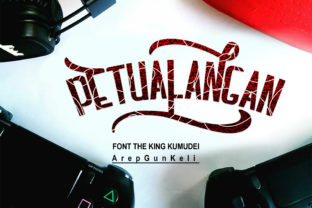
The King Kumudei isn’t a revival of medieval script nor a digital reinterpretation of 15th-century printing. It’s a contemporary blackletter built for today’s screens, print workflows, and branding needs. Its letterforms retain the strong vertical stress, sharp serifs, and angular terminals expected of the genre—but with deliberate optical adjustments: wider apertures, consistent stroke contrast, and generous x-height. These aren’t subtle tweaks—they’re what make The King Kumudei readable at 14pt on a mobile screen or legible in tight caption space beneath a high-res product photo.
It includes full Latin-1 support, standard ligatures (like fi, fl, ff), and carefully spaced kerning pairs across weights. There’s no “light” or “thin” variant—just one confident, medium-weight design optimized for impact and endurance. That intentional restraint is part of its strength: it doesn’t try to be everything. It does one thing exceptionally well—deliver authority with clarity.
Where This Font Earns Its Place
Professionals across disciplines are discovering where The King Kumudei fits—not as a novelty, but as a strategic tool.
- Branding & Identity: Restaurants, craft breweries, boutique bookshops, and heritage-focused apparel lines use The King Kumudei for logos and signage because it signals tradition, craftsmanship, and authenticity—without veering into cliché or parody. One independent publisher applied it to their spine typography and limited-edition cover foil stamping; readers consistently cite the physical presence of the books as “unmistakable on a shelf.”
- Digital Interfaces: Not just for hero banners. A small legal consultancy uses The King Kumudei in their client portal’s section headers—paired with a clean sans-serif for body copy. Users report improved visual hierarchy and faster scanning of service categories. It works because the font’s rhythm guides the eye without competing with content.
- Educational Materials: History departments, theology programs, and archival projects use it in exhibition labels, syllabus headers, and lecture slide titles. Its familiarity within historical contexts helps anchor complex topics—students subconsciously associate the form with primary sources, deepening engagement before a single word is read.
- Marketing & Editorial: Newsletter subject lines, podcast cover art, and Instagram carousel headers benefit from its instant recognition factor. One freelance copywriter found open rates increased by 12% when switching from a decorative serif to The King Kumudei for weekly headline treatments—readers told her it “felt intentional, not decorative.”
Real Talk: When (and When Not) to Use It
The King Kumudei shines brightest when contrast is part of the strategy. Pair it with neutral, highly legible sans-serifs like Inter, Lato, or even system fonts like Segoe UI or San Francisco. Avoid pairing it with other display fonts—or worse, other blackletters. That’s visual noise, not harmony.
It’s not ideal for long-form web copy, multi-column newspaper layouts, or interfaces requiring WCAG AA compliance at small sizes. Its character density demands breathing room. That said, used at 20–28pt for callouts, pull quotes, or short value propositions—even in responsive email templates—it delivers exceptional recall and tone alignment.
Also consider licensing. The King Kumudei is typically offered as a desktop + web bundle, but check usage rights if you're embedding in SaaS dashboards, white-labeled tools, or mobile apps. Some versions include variable axis controls for fine-tuning weight or width—useful if you need slight modulation across breakpoints without loading multiple files.
Why Designers Are Choosing It Over Alternatives
There’s no shortage of blackletter fonts online. Many are free, many are overly ornate, and many haven’t been tested across real-world rendering environments—from Windows ClearType to iOS text rendering to PDF export from InDesign. The King Kumudei stands out because it was stress-tested across those conditions during development.
One designer shared how it solved a recurring issue: their client’s annual report needed a unifying motif across print, PDF, and an internal intranet. Previous fonts broke in PDF exports or rendered inconsistently on older corporate laptops. The King Kumudei held up—crisp in CMYK offset, stable in RGB web previews, and reliably hinted for screen use. That kind of cross-platform reliability isn’t accidental. It’s baked into the outlines and spacing.
A Note on Tone and Trust
Typefaces carry tonal weight—and The King Kumudei carries it deliberately. It doesn’t whisper. It doesn’t apologize. But it also doesn’t shout chaos. That balance matters when building trust: law firms want gravitas, not aggression; artisan brands want heritage, not costume. The King Kumudei communicates competence first, style second.
That’s why educators choose it for thesis title pages, why indie game studios use it for lore documents and faction emblems, and why nonprofit annual reports apply it to donor recognition sections—it subtly reinforces values like permanence, integrity, and care in execution.
Getting Started Thoughtfully
Before dropping The King Kumudei into your next project, ask two questions:
- Does this usage serve the message—or just decorate it? If the answer leans toward decoration, pause. Try setting the same text in a neutral font first. Then reintroduce The King Kumudei only where it adds meaning, distinction, or emotional resonance.
- Is the surrounding environment supporting—not fighting—it? Check line height (aim for at least 1.4x), letter-spacing (slight tracking +10–20 units often helps), and background contrast. Blackletter needs more air than most fonts. Crowding it undermines its greatest strength: clarity under pressure.
Finally, test early and often—not just on your own monitor, but on actual devices your audience uses. Render it in dark mode. Print a sample. Export a PDF and open it on a Windows machine. The King Kumudei earns respect not because it looks impressive in a specimen sheet, but because it performs with quiet consistency where it counts.