Victory: A Handwritten Font with Real Character
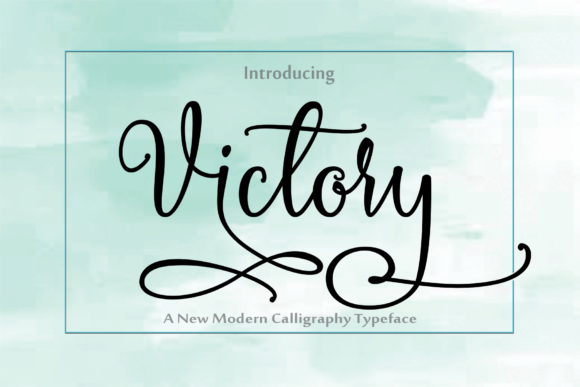
If you’ve ever stared at a blank design canvas wondering how to make something feel warm, human, and unmistakably *yours*, Victory might be the quiet collaborator you’ve been missing. It’s not a flashy, over-engineered script — it’s a premium handwritten font built from natural movement: subtle line variation, gentle slant, and intentional imperfections that echo real pen-on-paper rhythm. There’s no artificial symmetry here. Letters breathe, connect with soft confidence, and carry just enough personality to stand out without shouting.
Victory sits comfortably in the handwritten font category, but it avoids the overly ornate or cursive-heavy traps many script fonts fall into. Its lowercase ‘a’, ‘g’, and ‘y’ have open, friendly shapes; capitals are strong but never stiff. It’s a display font by nature — meant to lead, not to fill paragraphs — yet its clarity makes it surprisingly versatile across sizes and contexts. Think of it less as “calligraphy” and more as confident, practiced handwriting from someone who knows when to pause, when to lift the pen, and when to let a stroke taper just right.
Where Victory Earns Its Place
Because Victory balances expressiveness with legibility, it thrives where authenticity meets intention — not just decoration. In logo design, it gives small businesses and creative studios a distinct voice: a boutique bakery, an independent publisher, a wellness coach. The font conveys care and craft without leaning into clichéd “artisanal” tropes. On business cards or letterhead, it adds tactile warmth next to clean sans serif body text — reinforcing brand identity without competing for attention.
For editorial design and blogs, Victory works beautifully as a headline or section opener. Paired with a neutral, highly readable serif or sans serif (like Merriweather or Inter), it creates visual hierarchy that feels intentional, not forced. Social media graphics benefit especially: a quote overlay on an Instagram post, a limited-time offer banner on Facebook, or even a subtle watermark on Reels — Victory reads clearly at smaller sizes and holds up against busy backgrounds better than many delicate scripts.
It also translates well to physical touchpoints. We’ve seen Victory used effectively on product packaging for handmade soaps and ceramic mugs — its organic flow complements natural materials and artisanal positioning. In wedding stationery or event invites, it brings sincerity without formality. And for content creators building personal brands — podcast covers, YouTube thumbnails, Patreon banners — Victory helps signal individuality while remaining professional and approachable.
What Victory Does for Your Audience — and Your Work
Typography isn’t just about aesthetics — it’s one of the first nonverbal cues your audience receives. Victory subtly communicates trustworthiness through its consistency and control, and humanity through its natural rhythm. That duality matters. A healthcare blog using Victory for article titles signals empathy and expertise; a fashion brand using it for campaign headlines suggests confidence with nuance.
Readability is where Victory earns respect. Unlike some handwritten fonts that sacrifice function for flair, Victory maintains generous x-height, clear letterforms, and sensible spacing — even in all-caps settings. That means your message lands faster, especially on mobile screens or in quick-scroll environments like social feeds. And because it’s designed with real-world use in mind, it scales cleanly from 24px web headers to 72pt poster text without losing character or becoming muddy.
Consistency matters too. When you use Victory across multiple touchpoints — say, your website header, email newsletter banner, and printed workshop handout — it becomes a quiet anchor in your brand identity. Audiences begin to associate that particular rhythm and warmth with your voice. That kind of recognition builds over time, not overnight, but Victory gives you a strong, cohesive foundation to build on.
Using Victory Thoughtfully — Not Just Decoratively
Before dropping Victory into your next project, ask two practical questions: Is this the first thing I want people to notice? and Does it support — rather than distract from — the message? It’s a display font, so reserve it for headings, logos, pull quotes, or short accent phrases. Avoid long paragraphs or dense captions.
Test pairings early. Victory pairs best with typefaces that offer contrast without conflict: a sturdy, slightly warm sans serif (like Poppins or Lato) for body text, or a classic serif (like Source Serif Pro or PT Serif) for editorial depth. Avoid other script or decorative fonts nearby — they’ll compete. Also check the included styles. Most Victory licenses include regular, bold, and sometimes italic variants — use those weight differences to create emphasis instead of switching fonts entirely.
Pay attention to context. On low-resolution screens or printed materials with absorbent paper, lighter weights may fade. Stick with Bold or Regular for maximum reliability. And always preview at actual size — what looks elegant at 120pt on your monitor might blur at 36pt in an email footer.
Licensing and Practical Next Steps
Victory is a commercial font, meaning it requires a license for any use tied to business, branding, or public distribution — including websites, client work, merchandise, or digital products. Free versions or pirated downloads often lack critical OpenType features (like ligatures or alternate characters), may be poorly hinted for screen use, and carry legal risk. Reputable sources provide clear licensing terms, technical support, and updates.
If you’re evaluating Victory for a specific project, download a trial version first. Set up a simple mockup: a logo lockup, a social post, and a print-ready business card. Test it with real copy — not just “The quick brown fox.” Try your brand name, tagline, and a short customer testimonial. Does it feel like a natural extension of your voice? Does it hold up under different lighting or screen brightness? If yes, it’s likely a fit.
Remember: great typography doesn’t draw attention to itself — it quietly elevates everything around it. Victory does exactly that. It won’t fix weak messaging or poor layout, but in the hands of thoughtful designers, marketers, and creators, it becomes part of the reason people pause, remember, and connect.