Way to the Heart Duo
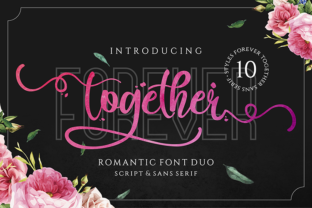
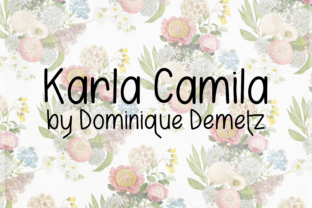
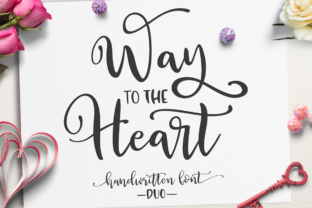
Handwritten typefaces have quietly reshaped how brands communicate warmth, authenticity, and intention. Among them, Way to the Heart Duo stands out—not as a trend-chasing novelty, but as a thoughtful pairing of craft and utility. It consists of two complementary styles: The Way to the Heart, a sweet handmade font with gentle curves and organic rhythm, and its refined counterpart designed for contrast, clarity, and versatility. Together, they form a duo that bridges expressive charm with functional precision—something increasingly rare in today’s saturated digital landscape.
Why Handmade Typography Matters More Than Ever
Consumers don’t just see logos or headlines—they register tone before meaning. A study by Adobe Creative Cloud found that 73% of designers report clients now prioritizing “human-centered” aesthetics over sterile perfection. That shift reflects deeper habits: scrolling through feeds dominated by AI-generated uniformity, users pause longer for visuals that feel intentionally made—not algorithmically optimized. The Way to the Heart answers that instinct. Its slight variations in stroke weight, subtle irregularities, and soft terminals suggest care, not calculation. It doesn’t shout—it invites.
This isn’t nostalgia for analog tools. It’s responsiveness to how attention works today: fragmented, emotionally attuned, and skeptical of polish without personality. When a small-batch candle brand uses The Way to the Heart on its label, it signals values—thoughtfulness, local craft, sustainability—without stating them outright. That kind of silent alignment is what modern branding demands.
From Decoration to Design System Anchor
Historically, handwritten fonts were relegated to accents: wedding invites, café chalkboards, Instagram story overlays. But Way to the Heart Duo challenges that limitation. Its companion style—often a clean sans-serif or subtly structured serif—was crafted to harmonize, not contrast jarringly. This intentional duality lets designers build cohesive systems: one voice for storytelling (the handmade script), another for information hierarchy (its partner). No need to hunt for unrelated fonts or force mismatched pairings.
Consider a freelance educator launching an online course on mindful communication. Using The Way to the Heart for section headers and quotes adds approachability; its duo partner handles lesson titles, navigation labels, and downloadable worksheets. The result feels unified—not “designed,” but *considered*. That coherence builds trust faster than any marketing copy.
How Real Workflows Are Changing
Tools like Canva, Figma, and even Google Docs now support variable fonts and expanded character sets—but many still lack true handwriting nuance. Glyphs may repeat, spacing feels mechanical, or ligatures break across platforms. Way to the Heart Duo was built with these realities in mind: OpenType features include contextual alternates, swashes, and punctuation tailored for both screen and print. Its lowercase “a” and “g” offer stylistic options that adjust automatically based on surrounding letters—so “love” and “heart” look distinct, not duplicated.
For marketers managing multiple touchpoints—email campaigns, social assets, PDF workbooks—the consistency matters. You’re not manually adjusting kerning in ten different files. You’re selecting a font that adapts intelligently, reducing friction without sacrificing character.
Practical Uses Beyond the Obvious
- Product packaging: A ceramicist uses The Way to the Heart for her studio name and the duo’s sans-serif for care instructions—clear, legible, and rooted in the same visual language.
- Digital interfaces: A therapy app incorporates the script for welcome messages and affirmations, while its partner handles menus and forms—balancing empathy with usability.
- Educational materials: A homeschool curriculum designer applies the handwritten style to chapter openers and reflection prompts, reinforcing themes of curiosity and personal growth.
- Local business signage: A neighborhood bookstore pairs the font duo on its window decal—inviting script above, crisp details below—creating visual breathing room without visual clutter.
Evolving Expectations, Not Just Aesthetics
What’s changed isn’t just taste—it’s expectation. Audiences no longer accept “generic professional” as default. They expect brands to reflect values in micro-decisions: color choice, image curation, and typography. A font like The Way to the Heart supports that expectation because it carries intentionality in its construction. Each curve was drawn, scanned, and refined—not generated from a prompt.
That human origin also affects perception of authenticity. In a 2023 survey of small business owners, 68% said customers commented directly on their website’s “friendly” or “warm” feel—and typography was cited more often than layout or imagery. Why? Because letterforms operate at a subconscious level. Sharp angles signal efficiency; rounded forms suggest openness. Way to the Heart Duo leans into that psychology deliberately—not manipulatively, but respectfully.
Choosing Thoughtfully, Not Decoratively
Using a handmade font doesn’t mean defaulting to whimsy. Overuse dilutes impact. The strength of Way to the Heart Duo lies in restraint: one strong voice for emotional resonance, one grounded voice for structure. Think of it like a duet—both parts matter, but neither overpowers.
A practical guideline: reserve the handwritten style for moments where you want the viewer to slow down—brand names, taglines, pull quotes, hand-lettered illustrations. Use its partner for everything else: body text, captions, data labels, interface elements. This balance prevents fatigue and maintains readability across devices and contexts.
Also consider licensing. Many free handwritten fonts lack extended language support, OpenType features, or commercial rights. Way to the Heart Duo includes multilingual glyphs (including accented Latin characters), full punctuation sets, and clear usage terms—making it viable for global blogs, bilingual newsletters, or international product launches.
Where Craft Meets Clarity
In a world accelerating toward automation, the value of handmade marks isn’t diminishing—it’s clarifying. People aren’t rejecting technology; they’re seeking anchors within it. A font like The Way to the Heart offers that anchor: familiar enough to feel safe, distinctive enough to stand apart.
It’s not about choosing “cute” over “competent.” It’s about recognizing that competence today includes emotional intelligence—expressed through design choices that honor attention spans, cultural context, and the quiet power of a well-drawn letter. Way to the Heart Duo gives creators a way to embed that intelligence into their work, consistently and sustainably.
Whether you're refining a logo, designing a workshop workbook, or updating your portfolio site, the question isn’t whether you “need” a handwritten font. It’s whether your message deserves the nuance only human-made forms can convey. When the answer is yes, Way to the Heart Duo offers more than style—it offers alignment.