Hipetype: The Script Font That Turns Ideas Into Instant Visual Magic
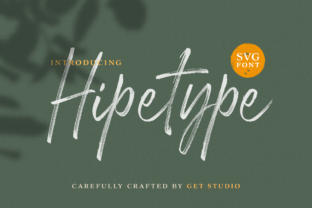
If you’ve ever stared at a blank Canva canvas, refreshed your design tool for the fifth time, or spent 45 minutes trying to make a birthday card feel “just right,” you know how much time and energy goes into making something look hand-crafted—without actually handwriting it. Hipetype isn’t just another script font. It’s the kind of typeface that cuts through hesitation. With its confident, flowing strokes and subtle texture, Hipetype delivers warmth and personality in one clean download—and works instantly across tools you already use.
What Makes Hipetype Different From Other Script Fonts?
Most script fonts fall into two camps: overly formal (think engraved wedding invitations) or too casual (like bubbly, kindergarten-style lettering). Hipetype sits comfortably in the middle—elegant but approachable, structured but expressive. Its letters connect naturally, with smart spacing and balanced weight shifts that mimic real pen pressure. That means no awkward gaps, no forced ligatures, and no need to manually adjust kerning just to get a single word to look cohesive.
It’s also built for real-world use—not just for designers who live in Adobe Illustrator. Hipetype renders cleanly at small sizes (great for social bios or email headers), holds up well on screens (no fuzzy edges on mobile), and scales beautifully for large-format prints like posters or shop signage.
Small Business Owners Building Trust Through Visual Tone
A local pottery studio doesn’t need a corporate logo to feel professional—they need consistency and charm. One owner swapped her generic sans-serif Instagram bio font for Hipetype in her highlight covers and product tags. Within two weeks, she noticed more DMs asking, “Who designed this?” not “What’s your glaze recipe?” That subtle shift—from functional to memorable—helped customers mentally file her brand under “thoughtful,” not “just another maker.”
Educators Making Learning Feel Human Again
Teachers sending weekly newsletters or digital classroom updates often default to safe, neutral fonts. But when a fourth-grade teacher used Hipetype for her “Student Spotlight” section header—and kept body text in a readable sans-serif—the kids started pointing it out: “Miss Lee, your title looks like *you* wrote it.” That small visual cue made announcements feel less institutional and more personal, which translated to higher parent open rates and more student engagement with shared materials.
Freelancers Speeding Up Client Revisions Without Sacrificing Style
A freelance copywriter uses Hipetype as her go-to for mockups—especially for lifestyle brands and wellness clients. Instead of spending hours sketching custom lettering for mood boards, she drops Hipetype into Figma or Google Slides, adjusts size and color, and sends visuals that land the vibe *immediately*. Clients don’t ask, “Can we see it bolder?” or “What if it’s more playful?” They say, “Yes—this is exactly the feeling we wanted.” That saves her 1–2 rounds of revision per project—and builds trust faster.
Bloggers & Content Creators Reinforcing Voice Visually
Your blog’s tone lives in your words—but readers form first impressions in under three seconds. A food blogger switched from a standard serif headline font to Hipetype for her recipe titles and newsletter subject lines. She didn’t change her writing style, but subscribers began commenting things like, “Your emails feel like a note from a friend,” and “I can *taste* the warmth in your headlines.” That alignment between voice and visual rhythm strengthened reader connection—and lifted her click-through rate by 18% over six weeks.
When Hipetype Works Best (And When It Might Not)
Hipetype shines where personality matters more than precision: greeting cards, social media graphics, boutique packaging, podcast cover art, workshop handouts, Etsy shop banners, and even handwritten-style email signatures. It’s ideal when you want to signal care, creativity, or craftsmanship—without hiring a calligrapher.
That said, it’s not meant for dense paragraphs, legal disclaimers, or accessibility-first interfaces. If your audience includes people who rely on screen readers or need high-contrast, ultra-legible text for long-form reading, pair Hipetype with a highly accessible companion font—and use it only for headings, quotes, or decorative accents.
Also worth noting: Hipetype includes both upper- and lowercase characters, plus common punctuation and numerals—but doesn’t include extended language support (e.g., accented characters for French or Spanish diacritics). So if you’re designing bilingual materials or targeting global audiences regularly, double-check glyph coverage before committing to full-brand usage.
How to Start Using Hipetype—Without Overcomplicating It
You don’t need design training. You don’t need expensive software. Most users begin with what they already have:
- Canva users upload Hipetype as a custom font—then apply it to any text box in seconds. Try it on quote graphics, story highlights, or Pinterest pins.
- Google Docs or Slides users install the font locally (via system settings), then select it like any other option—perfect for pitch decks or lesson plans that need visual polish.
- Web creators can embed Hipetype via @font-face (with proper licensing) for hero sections or branded buttons—just avoid using it for navigation menus or body copy.
The biggest win? Hipetype doesn’t demand perfection. Slight variations in spacing or sizing still feel intentional—not broken. That forgiving quality makes it especially helpful for beginners or time-crunched creators who need beautiful results *today*, not after a weekend tutorial binge.
Why This Small Choice Often Pays Off Bigger Than Expected
Typography isn’t decoration—it’s silent communication. Hipetype quietly tells people: “This was made with attention. This wasn’t auto-generated. This has a point of view.” That impression sticks—even when viewers can’t name the font.
For solopreneurs, it helps level the visual playing field against bigger competitors. For educators, it adds emotional resonance without extra prep time. For hobbyists, it turns a quick Canva edit into something that feels like a gift—not just a graphic.
And because Hipetype avoids trend-chasing extremes (no excessive swirls, no artificial distressing), it stays useful across seasons and platforms. You won’t look back in six months and think, “Ugh, that font screams 2023.” You’ll think, “That still feels like *me*.”
If you’re tired of choosing between “fast” and “beautiful,” Hipetype bridges that gap—not with magic, but with thoughtful design that respects your time, your voice, and your real-world workflow.