Soredime Font: The Elegant Script Choice for Logos, Invitations, and Creative Branding
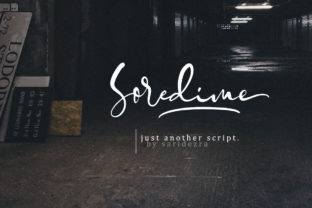
When it comes to typography that balances sophistication with approachability, Soredime stands out as a refined and versatile script font. Designed with graceful curves, subtle contrast, and a natural hand-drawn rhythm, Soredime isn’t just another decorative typeface—it’s a thoughtful tool for visual storytelling. Whether you’re crafting a luxury brand identity, designing wedding stationery, or adding personality to apparel or social media graphics, Soredime brings warmth, elegance, and intentionality to every letter.
What Is Soredime—and Why Does It Stand Out?
Soredime is an elegant script font inspired by classic calligraphy but refined for modern digital use. Unlike overly ornate scripts that sacrifice legibility—or minimalist sans-serifs that lack character—Soredime strikes a deliberate balance. Its letters flow with organic consistency, featuring gentle entry and exit strokes, soft terminals, and balanced spacing that ensures readability even at smaller sizes.
What sets Soredime apart from many script fonts is its intentional versatility. While some scripts are strictly decorative (best suited only for large headlines), Soredime includes carefully crafted alternates, ligatures, and OpenType features that support both expressive flair and functional clarity. This makes it equally effective on a business card and a 24-inch wedding invitation suite.
Where Soredime Truly Shines: Real-World Applications
Understanding where and how to apply a font is just as important as knowing its aesthetic qualities. Here’s how Soredime adds value across key creative and professional contexts:
Branding & Logo Design
Logos need to communicate identity at a glance—and Soredime delivers instant recognition through personality. Brands in fashion, wellness, beauty, and boutique services often choose Soredime to evoke trust, refinement, and human-centered values. For example, a handmade soap company might pair Soredime’s flowing “S” with a clean sans-serif for body text—creating contrast that feels intentional, not chaotic.
Wedding & Event Invitations
Nothing says “thoughtful celebration” quite like custom typography. Soredime’s romantic yet timeless feel makes it ideal for formal invitations, save-the-dates, menus, and signage. Because it supports both uppercase and lowercase variations—and includes stylistic sets for names, dates, and quotes—it adapts seamlessly to layered design systems without requiring multiple fonts.
Quote Graphics & Social Media Content
In today’s visually driven digital landscape, quote-based content performs exceptionally well—especially when paired with evocative typography. Soredime lends emotional resonance to affirmations, poetry snippets, or brand mantras. Its rhythm encourages pause and reflection, helping messages land more deeply than generic fonts ever could.
Clothing, Packaging, and Merchandise
From embroidered tote bags to minimalist candle labels, Soredime translates beautifully to physical products. Its moderate stroke contrast ensures crisp reproduction in embroidery, foil stamping, and screen printing—unlike ultra-thin scripts that risk disappearing in production. Designers appreciate how it scales consistently across formats, maintaining charm whether printed at 8pt on a tag or blown up to 60pt on a storefront banner.
Common Misconceptions About Script Fonts—And Why Soredime Avoids Them
Many people assume all script fonts are either “too fancy” or “hard to read.” Others believe they’re unsuitable for professional branding—or worse, that using them signals a lack of design expertise. These assumptions stem from outdated experiences with poorly engineered fonts or misuse in inappropriate contexts.
Soredime challenges those myths by being:
- Legible first: Carefully optimized letterforms avoid ambiguity—no confusing “a”/“o” or “r”/“n” pairings.
- Technically robust: Fully compatible with Adobe Creative Cloud, Canva, Figma, and web platforms via variable font files or WOFF2 embedding.
- Context-aware: Comes with alternate glyphs and contextual ligatures that activate automatically in supporting software—so your “Th” or “Qu” combinations look authentically hand-lettered, not slapped together.
In short: Soredime doesn’t ask you to compromise between beauty and function. It’s built for real work—not just pretty pictures.
How Soredime Fits Into Today’s Creative Ecosystem
Typography is no longer just about print—it’s central to UX, accessibility, brand consistency, and cross-platform communication. Soredime reflects this evolution. Its design anticipates use across devices and mediums: responsive websites, email newsletters, animated Instagram Stories, and even voice-assisted interfaces (where clear, distinctive branding supports audio recognition cues).
For small businesses and solopreneurs, Soredime offers a strategic advantage. A memorable, emotionally resonant logo or social post builds familiarity faster than generic fonts—especially in saturated markets like coaching, e-commerce, or artisan goods. And because it’s available in both desktop and web-licensed versions, creators can scale their usage responsibly without licensing surprises.
Educators and students also benefit: learning typography principles becomes more tangible when working with a font like Soredime that demonstrates hierarchy, rhythm, and contrast in action—not just theory. Its structure invites experimentation with pairing, spacing, and color—building foundational skills that transfer to any design challenge.
Getting Started With Soredime: Practical Tips for Best Results
Even the most beautiful font needs thoughtful application. Here’s how to make the most of Soredime:
- Pair wisely: Contrast Soredime with a neutral, highly legible sans-serif (e.g., Inter, Poppins, or Montserrat) for body copy. Avoid competing scripts or overly decorative companions.
- Respect hierarchy: Use Soredime primarily for headlines, names, or key phrases—not paragraphs. Let supporting fonts handle information density.
- Test at scale: Preview your design at actual size—on screen and in print. Adjust tracking (letter spacing) slightly if needed; Soredime often benefits from +10–+20 units in larger display settings.
- Leverage OpenType features: In apps like Illustrator or Affinity Designer, enable stylistic sets to access flourishes, swashes, or alternate capitals—adding polish without manual tweaking.
- Consider accessibility: While Soredime shines in visual contexts, always provide alt text for images containing its text—and never rely solely on script fonts for critical UI elements like navigation or form labels.
Final Thoughts: More Than Just a Font—A Design Ally
Soredime is more than a collection of vector outlines. It’s a response to the growing demand for authenticity in digital spaces—a reminder that technology doesn’t have to feel cold or impersonal. When chosen intentionally and used skillfully, it bridges emotion and utility, tradition and innovation, artistry and strategy.
Whether you're launching your first Etsy shop, redesigning a nonprofit’s visual identity, or simply wanting to elevate your personal projects, Soredime offers a rare combination: immediate visual appeal backed by thoughtful craftsmanship. It doesn’t shout for attention—it invites connection. And in a world flooded with noise, that quiet confidence may be the most powerful design choice of all.
If you're ready to explore Soredime further, check out its official website for licensing options, specimen guides, and free trial downloads. You’ll also find curated pairing suggestions, tutorial videos, and community examples—all designed to help you use Soredime with purpose, precision, and pride.